 listicle
Best Retirement Communities in Upstate SC for Seniors
Table of Contents
- Quick Comparison: Best Retirement Communities in Upstate SC
- The Woodlands at Furman: University-Based Living
- Rolling Green Village: Diverse Housing in Greenville
- Cascades Verdae: Luxury and Full Continuum of Care
- Maple Brook Terrace: All-Inclusive Independent Living
- TerraBella Greenville: Quiet Campus Near City Life
- The Foothills Retirement Community: Established Easley Option
- Cost of Independent Living in Greenville SC
- What to Check Before You Tour
- Frequently Asked Questions
Last Updated: September 17, 2026
Quick Comparison: Best Retirement Communities in Upstate SC
Finding the best retirement communities in Upstate SC for seniors starts with one honest question: what kind of life do you want after you stop working? The Upstate has quietly become one of the strongest retirement markets in the Southeast, and this guide breaks down seven communities that cover the full range, from university-connected campuses to all-inclusive monthly models.

| Community | Location | Starting Price | Care Levels | Best For |
|---|---|---|---|---|
| The Woodlands at Furman | Greenville | Contact for pricing | Independent living, memory care | Academic and cultural lifestyle |
| Rolling Green Village | Greenville | $2,783/month | Independent living | Varied housing styles |
| Cascades Verdae | Greenville | Contact for pricing | Full continuum of care | Luxury and long-term security |
| Maple Brook Terrace | Greenville | $3,500/month | Independent living | Predictable all-inclusive budget |
| TerraBella Greenville | Greenville | Contact for pricing | Independent living | Quiet campus near city life |
| The Foothills Retirement Community | Easley | Contact for pricing | Varies by service level | Small-town setting outside the city |
The Woodlands at Furman: University-Based Living
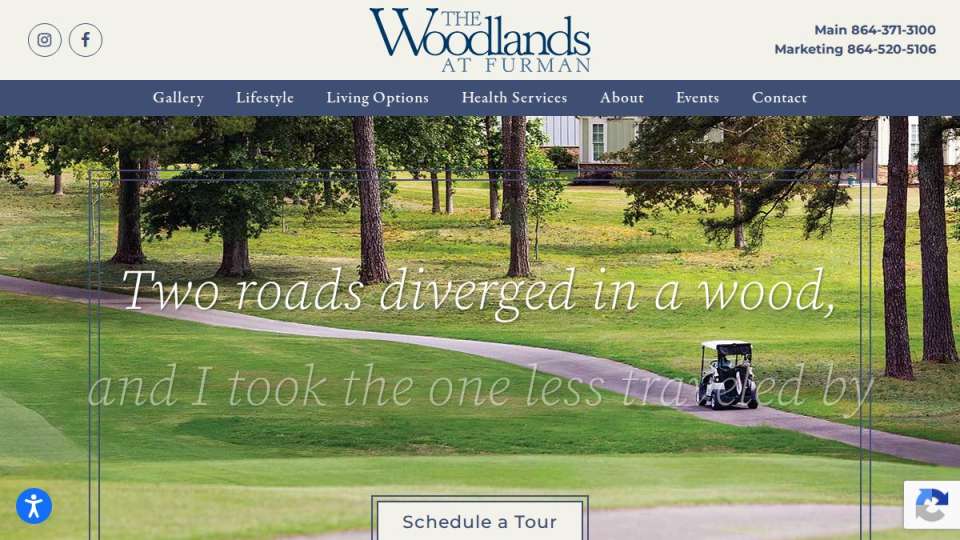
The Woodlands at Furman is a university-based retirement community next to Furman University, combining independent living with on-site memory care. Residents get access to campus amenities and lifelong learning programs, which is a genuine differentiator rather than a marketing line.
Rolling Green Village: Diverse Housing in Greenville
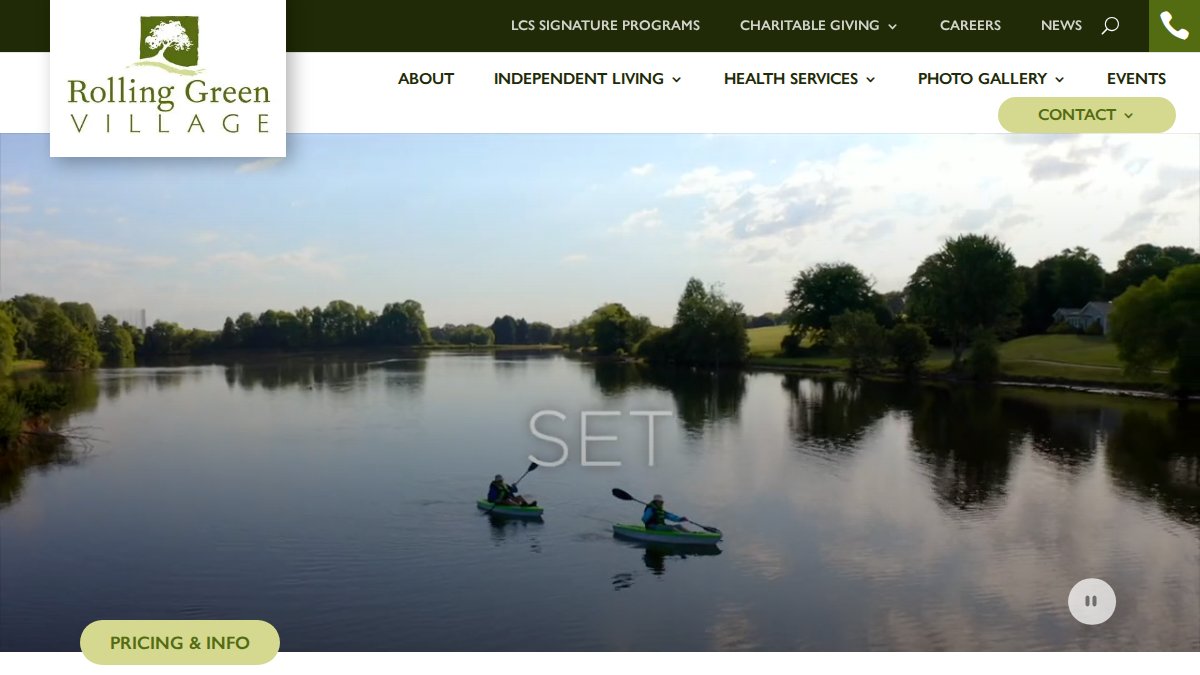
Rolling Green Village offers the widest housing range on this list: houses, cottages, and apartments on one large Greenville campus. Published monthly fees start at $2,783 and reach $6,539 at the upper end, so the spread between floor plans is substantial.
Cascades Verdae: Luxury and Full Continuum of Care
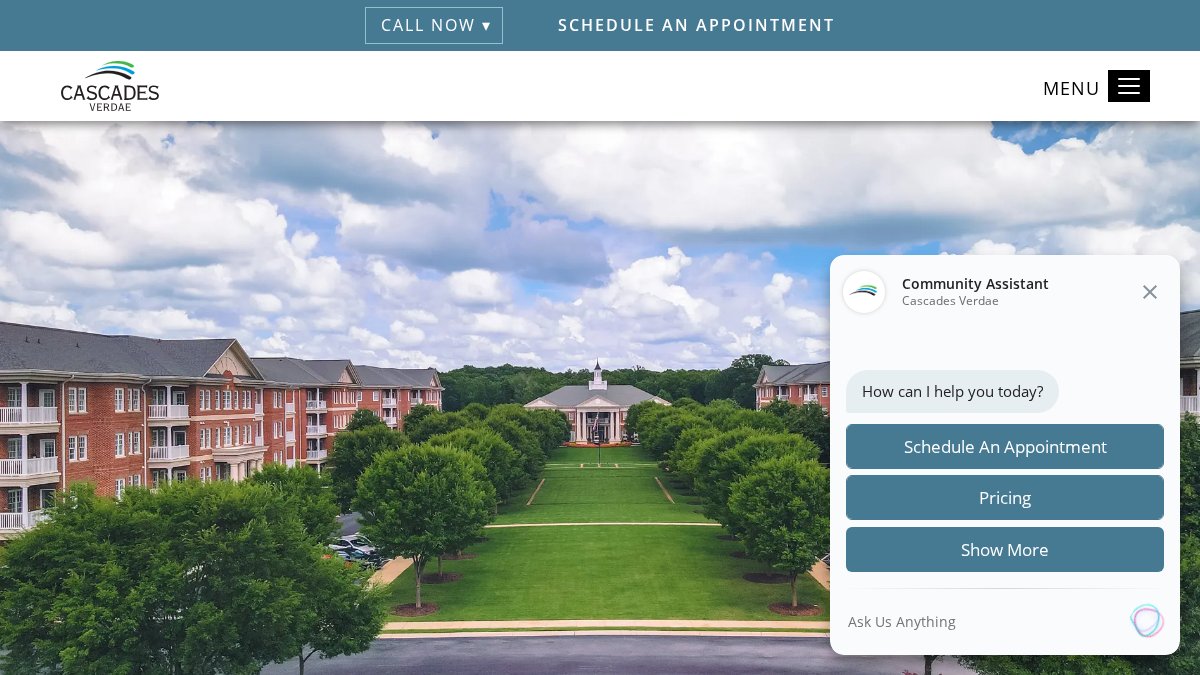
Cascades Verdae is a luxury retirement community in Greenville built around a full continuum of care on one campus: independent living, assisted living, memory care, skilled nursing, and rehabilitation services. For couples with different care needs, that single-campus structure removes the hardest logistical problem in senior housing, the possibility that one spouse needs a higher level of care and the other does not.
What 'Continuum of Care' Actually Means
The phrase gets used loosely in marketing, so it is worth unpacking. A true continuum means a resident can move between levels of care without leaving the property or signing a new contract with a different operator. In practice, that breaks into four distinct service tiers:
- Independent living, private residences with meals, housekeeping, transportation, and social programming, but no hands-on daily care.
- Assisted living, help with activities of daily living (bathing, dressing, medication management, mobility), typically billed as a base rate plus a care-level tier.
- Memory care, a secured environment with specialized programming for Alzheimer's and other dementias, staffed at a higher ratio than assisted living.
- Skilled nursing and rehabilitation, licensed clinical care, often used for post-surgery recovery, chronic condition management, or long-term nursing needs.
The Trade-Off You Are Actually Buying
Finishes and amenities sit at the high end, and pricing varies by level of care. The trade-off is straightforward: you pay premium rates for medical services you may not need for years. If you want long-term care security locked in before your health changes, this model earns its cost. If you are purely shopping for independent living, you are subsidizing services you will not use yet.
Availability and Waitlist Reality
Top-tier continuing care campuses in the Upstate routinely run waitlists, and the waitlist for independent living is usually shorter than the waitlist for assisted living or memory care. If you are planning five to ten years out, ask two questions: how long is the current waitlist for each care level, and does joining the independent living waitlist give you priority for a future care-level transfer? Get the answer in writing.
Maple Brook Terrace: All-Inclusive Independent Living
Maple Brook Terrace is an all-inclusive senior living community in Greenville with a published starting rate of $3,500 per month. One fee covers the apartment, meals, and community services, which makes it the easiest option on this list to budget against.
TerraBella Greenville: Quiet Campus Near City Life
TerraBella Greenville sits near the center of the Upstate, pairing a landscaped, quiet campus with easy access to Greenville's cultural attractions. Independent living comes with supportive services available as needs change.
Why Location Is the Real Differentiator Here
Most retirement community guides list amenities and stop there. For seniors managing chronic conditions, the more useful question is: how far is the hospital, and which system is it? Greenville's medical infrastructure is anchored by Prisma Health Upstate, which operates the region's largest hospital network, including Prisma Health Greenville Memorial Hospital. Bon Secours St. Francis also maintains a significant presence in the city.
Cultural and Outdoor Integration
Downtown Greenville's cultural district, the Peace Center for the Performing Arts, the Greenville County Museum of Art, and the restaurants and shops along Main Street, sits within a short drive of the campus. The Swamp Rabbit Trail, a multi-use greenway that runs through Greenville and into Travelers Rest, gives residents a walkable and bikeable outdoor option that most retirement campuses cannot replicate on their own grounds.
Pricing and Availability
Pricing is not publicly listed, which is common across this market and worth pressing on during a tour. Ask for the rate sheet by floor plan, the current occupancy rate, and the waitlist length for independent living. If you are downsizing from a larger house and want to stay plugged into the city, this one deserves a visit, but go in with the same questions you would ask any campus, and get the answers in writing.
The Foothills Retirement Community: Established Easley Option
The Foothills Retirement Community is an established option in Easley serving the broader Upstate region. It offers a range of senior living services with a community-focused environment, and it appears in regional retirement guides.
Cost of Independent Living in Greenville SC
The cost of independent living in Greenville SC varies at the communities that publish rates, with all-inclusive models clustering around a certain price point. Communities that don't publish pricing typically quote after a financial review.
What to Check Before You Tour
- Request the published rate sheet by floor plan, not just the starting price
- Ask whether the entrance fee is refundable and under what schedule
- Confirm which care levels are on site and which require a move
- Ask about current waitlist length and occupancy
- Get the list of included services versus a la carte charges
- Map drive times to your primary physicians and hospital
- Ask how monthly fees have changed over the past five years
- Review the contract with your own attorney and tax advisor
Choosing a retirement community is a housing decision, a healthcare decision, and a tax decision at the same time, and most families only plan for the first one. Tax-Free Me helps pre-retirees and retirees in the Upstate coordinate Roth conversions, Social Security claiming strategies, and tax-advantaged income planning. Led by financial advisor R. Neal Angel, the firm focuses on reducing taxes in retirement and protecting what passes to your heirs.
Frequently Asked Questions
Which town in South Carolina is considered the best for retirement?
Greenville consistently ranks among the top retirement destinations in the state. The city offers a walkable downtown, access to top medical centers like Prisma Health and Bon Secours, and a moderate cost of living. Nearby Easley and Simpsonville provide quieter alternatives with similar amenities. The best town depends on whether you prioritize cultural activities, proximity to healthcare, or a lower cost of living.
What are the tax benefits of retiring in South Carolina?
South Carolina does not tax Social Security benefits. The state also offers a retirement income deduction for taxpayers aged 65 and older, which can reduce the amount of retirement income subject to state tax. Property taxes are relatively low compared to many states. Consult a tax professional to understand how these rules apply to your specific situation, as they can change.
What is the 80/20 rule in a 55+ community?
The 80/20 rule refers to the federal Fair Housing Act's exemption for housing for older persons. Under this rule, at least 80% of occupied units in a 55+ community must have at least one resident aged 55 or older. The remaining 20% can be occupied by younger individuals, though the community must still intend to provide housing for older persons. This allows some flexibility for caregivers or younger spouses.
What is the difference between independent living and assisted living in the Upstate?
Independent living communities in the Upstate, such as Rolling Green Village and Maple Brook Terrace, offer maintenance-free apartments or cottages with amenities like dining and social activities, but no personal care services. Assisted living provides help with daily tasks like bathing, dressing, and medication management. Some communities, like Cascades Verdae, offer a full continuum of care so residents can transition between levels as needs change.
How do I evaluate the financial stability of a Continuing Care Retirement Community (CCRC)?
Ask for the CCRC's audited financial statements, occupancy rates, and actuarial reports. Check whether it is accredited by CARF International, which sets standards for continuing care communities. Review the contract type: Type A (life care) offers the most predictability but higher entry fees, while Type C (fee-for-service) costs less upfront but charges more as care needs increase. A financial advisor can help you assess whether the entry fee and monthly costs fit your long-term plan.